Solar panels
Solar panels.
Black or blue cells, new cell types, and what heat does to them.
Updated November 2026
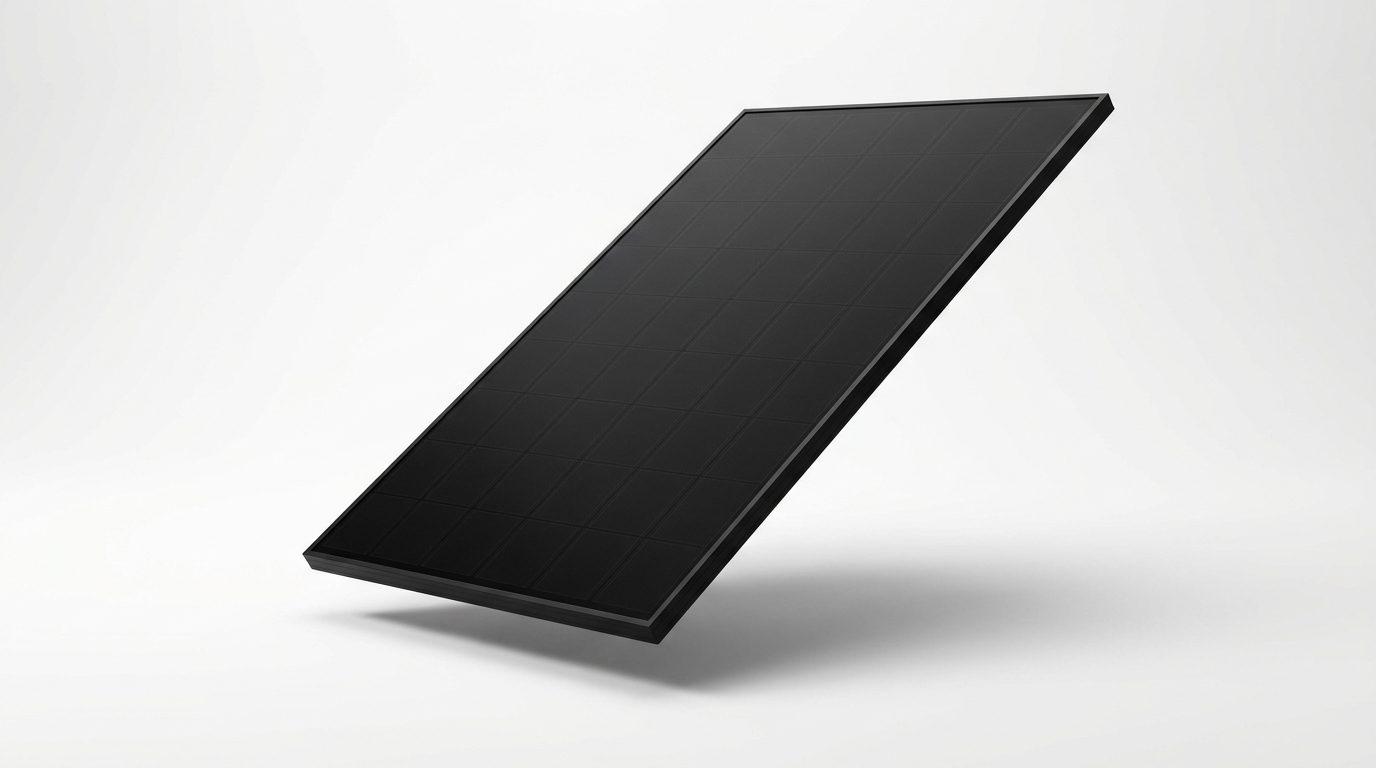
Mono or poly.
- Monocrystalline cells are black; polycrystalline cells are blue-ish (EnergySage).
- Mono typically runs 15 to 20% or higher and can exceed 23%. Poly tops out below 20% (EnergySage).
- Mono loses less output in heat, thanks to a lower temperature coefficient. That matters in a hot country (EnergySage).
- Both produce power efficiently for 25+ years (EnergySage). Silicon is by far the most common cell material (US DOE).
0.5%
A year. The median loss.
An NREL review of nearly 2,000 reported degradation rates found a median of 0.5% a year and a mean of 0.8%. Crystalline silicon generally stayed below 1% a year.
Newer cell types.
PERC, TOPCon and HJT are cell designs. TOPCon and HJT are N-type, with no first-year light-induced loss (A1 SolarStore, retailer typical figures).
Bifacial panels also collect light on the back. A1 SolarStore states a gain of 5–30% depending on the installation. A peer-reviewed study found HJT bifacial modules made 8.79% more energy than PERC, and TOPCon 5.55% more, at the tested site (Wang et al. 2022).
For context, the record lab cell is 27.3% and the record module 24.9% (Solar Cell Efficiency Tables v64). Panels you can buy are lower.
Two warranties.
- Product warranty: usually at least 10–12 years (EnergySage).
- Power warranty: often at least 90% output at year 10 and 80% at year 25 (EnergySage).
- The biggest drop is often 2–3% in year one, then about 0.5–0.7% a year (EnergySage).
At a glance
| PERC | TOPCon | HJT | |
|---|---|---|---|
| Efficiency | 20–22% | 22–25.5% | 24–26% |
| Heat loss per °C | about −0.35% | about −0.31% | about −0.26% |
| First-year LID | 1–3% | None (N-type) | None (N-type) |
| Yearly loss after | about 0.5% | about 0.4% | about 0.27% |
| Bifaciality | 65–75% | 80–90% | up to 95% |
Retailer typical figures (A1 SolarStore), not lab-verified.
Questions
Mono or poly for Philippine heat?
Mono has a lower temperature coefficient, so it loses less output in heat (EnergySage). It also costs more.
What should a panel warranty say?
Usually two things: a product warranty of at least 10–12 years, and a power warranty of about 90% output at year 10 and 80% at year 25 (EnergySage). Ask who backs it locally.
What does bifacial mean?
The panel also makes power from light hitting its back. A retailer states 5–30% extra, depending on the installation (A1 SolarStore).
Sources
- EnergySage: Monocrystalline vs Polycrystalline
- US DOE: Solar Photovoltaic Cell Basics
- A1 SolarStore: PERC vs TOPCon vs HJT (retailer)
- ScienceDirect: Energy yield of bifacial PV (Wang 2022) - abstract
- Solar Cell Efficiency Tables v64 (NREL-hosted PDF)
- NREL: Photovoltaic Degradation Rates - An Analytical Review
- EnergySage: Solar Panel Warranties (search excerpt)
Keep reading
Ready to see your own numbers?
Asking is free. Our service fee is included in the quote you receive.
Get my solar quote