PERC, TOPCon, HJT and bifacial panels explained
Quotes often name a cell technology: PERC, TOPCon or HJT. These are different ways of building a silicon cell.
Updated November 2026
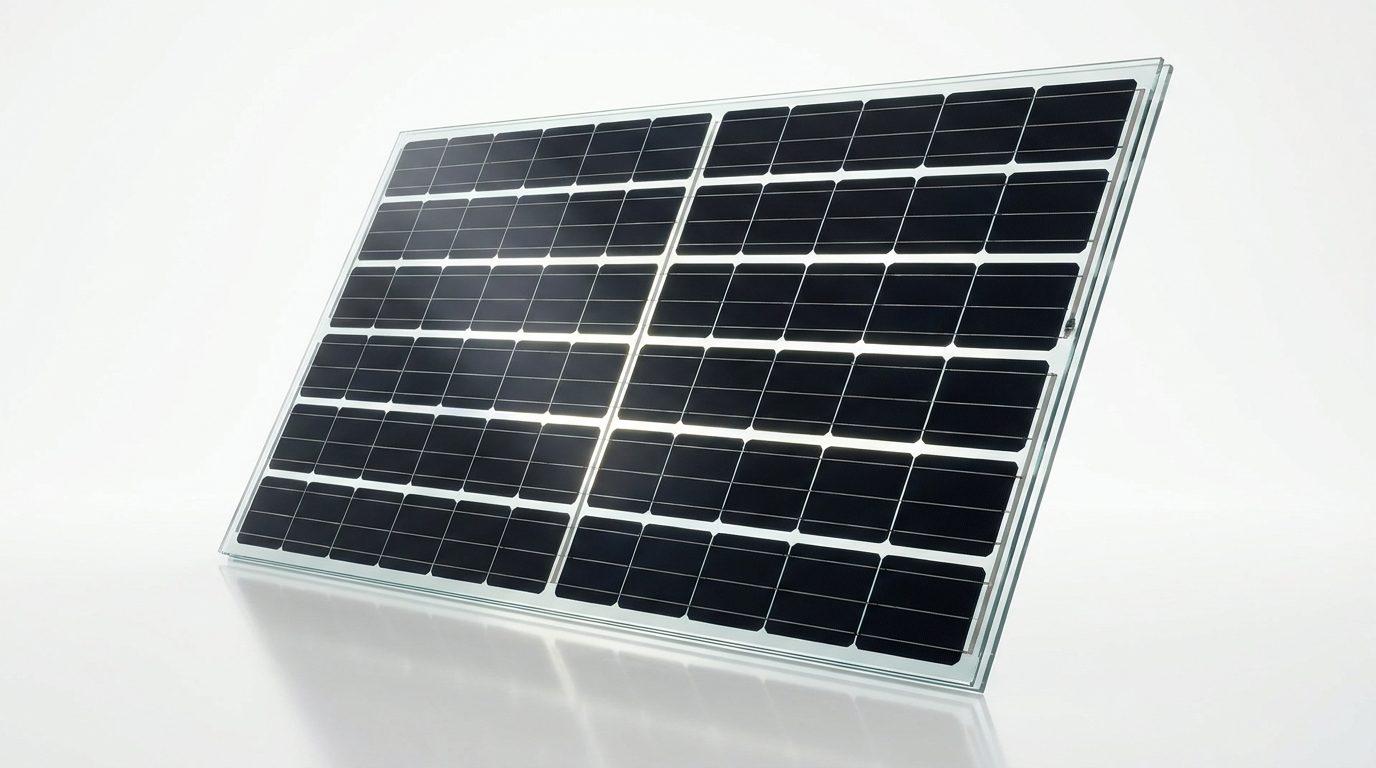
Typical figures (retailer, not lab-tested)
- PERC: 20–22% efficiency, about −0.35%/°C in heat, 1–3% loss in the first year (light-induced degradation), then about 0.5% a year.
- TOPCon: 22–25.5% efficiency, about −0.31%/°C, no first-year light-induced loss, about 0.4% a year.
- HJT: 24–26% efficiency, about −0.26%/°C, no first-year light-induced loss, about 0.27% a year.
These are typical ranges stated by A1 SolarStore, a US retailer. Treat them as a rough guide, and check each panel's own datasheet.
What the heat figure means
The temperature coefficient tells you how much power a panel loses for each degree it gets hotter. A number closer to zero is better in a hot climate. In the figures above, HJT is closest to zero and PERC is furthest.
Bifacial panels
A bifacial panel collects light on both sides. A1 SolarStore states an extra 5–30% of energy from the back side, depending on the installation.
Bifaciality is how well the back works compared with the front. A1 SolarStore gives 65–75% for PERC, 80–90% for TOPCon and up to 95% for HJT.
A peer-reviewed study (Wang et al. 2022) found bifacial HJT modules made 8.79% more energy than PERC, and TOPCon 5.55% more, at the site tested. Other sites will differ.
Lab records for context
The record silicon cell is 27.3% and the record silicon module is 24.9%, according to the Solar Cell Efficiency Tables (version 64, 2024). Panels for sale are below these records. NREL keeps a chart of record research cells, not of retail panels.
What to ask for
- The exact panel model and its datasheet.
- Its temperature coefficient of power.
- Its power warranty: how much output it guarantees after 10 and 25 years.
Sources
- A1 SolarStore (retailer): PERC vs TOPCon vs HJT
- Solar Energy journal: energy yield of bifacial PV (Wang et al. 2022, abstract)
- Solar cell efficiency tables, version 64 (2024)
- NREL Best Research-Cell Efficiency Chart
More guides
- Solar panel price in the Philippines (2026) ›
- Grid-tied, hybrid or off-grid solar: which one do you need? ›
- Net metering in the Philippines: how it works ›
- How many solar panels do I need? ›
- Is my roof good for solar panels? ›
- Solar for business in the Philippines ›
- Solar batteries: how long will my house run in a brownout? ›
- How to read your Meralco bill before going solar ›
- Solar panels, typhoons and maintenance in the Philippines ›
- 10 questions to ask before you buy solar ›
- Solar panel types: monocrystalline, polycrystalline and thin-film ›
- Solar panel degradation and warranties ›
- Solar inverters: string, micro, optimizer or hybrid? ›
- LiFePO4 vs lead-acid solar batteries in Philippine heat ›
- Does solar work in a brownout? ›
- Net metering with Meralco, step by step (2026 rules) ›
- Solar permits in the Philippines: electrical permit, CFEI and building permit ›
- How to read a solar panel datasheet ›