Solar panel types: monocrystalline, polycrystalline and thin-film
Most rooftop panels are made of silicon, in two kinds: mono and poly. Here is how to tell them apart and why heat matters.
Updated November 2026
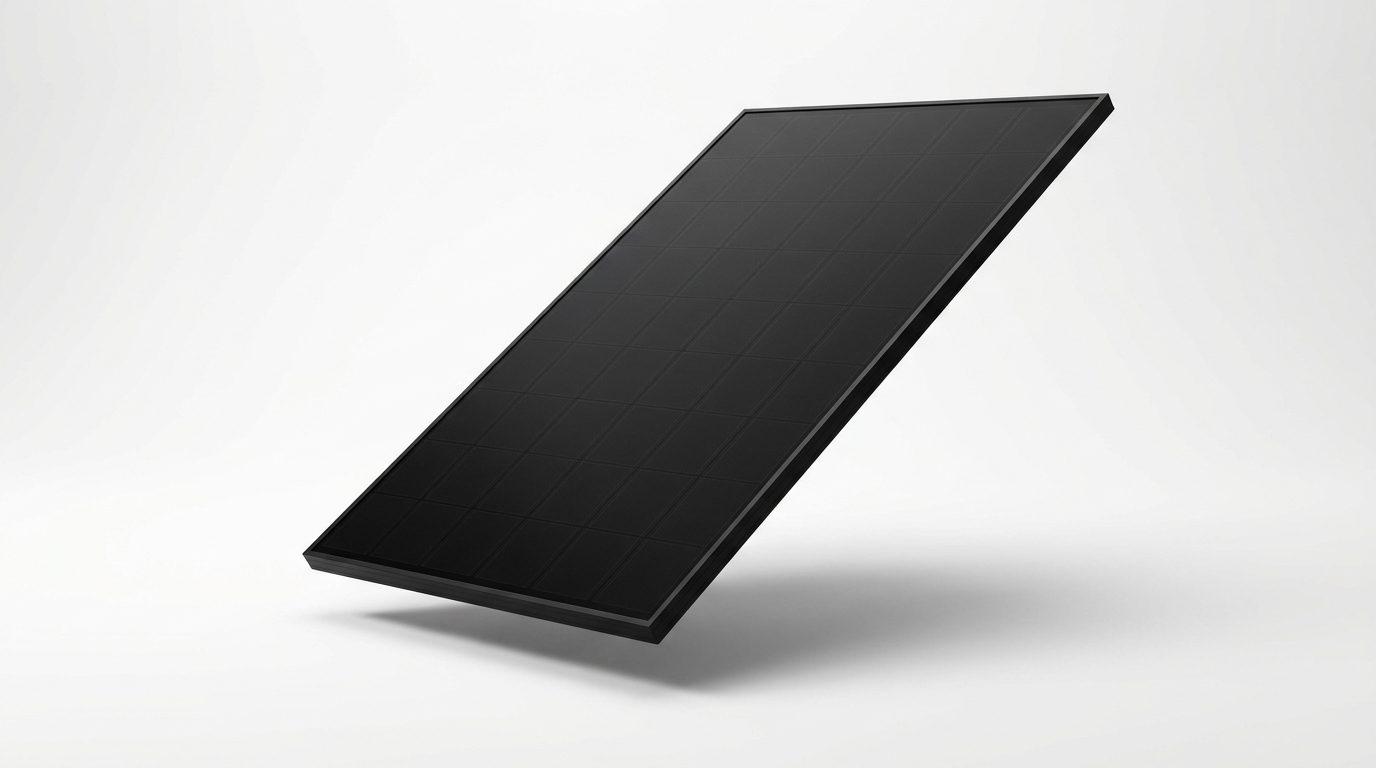
Silicon is the usual material
Silicon is by far the most common material in solar cells, according to the US Department of Energy. Rooftop silicon panels come in two kinds: monocrystalline (mono) and polycrystalline (poly).
How to tell them apart
- Monocrystalline: black cells.
- Polycrystalline: blue-ish cells.
Efficiency and price
- Mono: typically 15 to 20% or higher, and above 23% in some cases (EnergySage).
- Poly: below 20% (EnergySage).
- Mono costs more, poly costs less.
Higher efficiency means more power from the same roof area. This matters most when your roof is small.
Why heat matters here
All panels make less power when they get hot. Mono panels have a lower temperature coefficient, so they lose less output in heat (EnergySage). On a hot Philippine roof, that is worth asking about.
EnergySage says both mono and poly panels produce power efficiently for 25 years or more.
Thin-film
Thin-film is a different technology. In a review by the US National Renewable Energy Laboratory (NREL), thin-film panels aged closer to 1% a year, while crystalline silicon panels generally stayed below 1% a year. We have no sourced efficiency or price figures for thin-film panels: not measured.
Sources
- EnergySage: Monocrystalline vs polycrystalline
- US DOE: Solar photovoltaic cell basics
- NREL: Photovoltaic degradation rates, an analytical review
More guides
- Solar panel price in the Philippines (2026) ›
- Grid-tied, hybrid or off-grid solar: which one do you need? ›
- Net metering in the Philippines: how it works ›
- How many solar panels do I need? ›
- Is my roof good for solar panels? ›
- Solar for business in the Philippines ›
- Solar batteries: how long will my house run in a brownout? ›
- How to read your Meralco bill before going solar ›
- Solar panels, typhoons and maintenance in the Philippines ›
- 10 questions to ask before you buy solar ›
- PERC, TOPCon, HJT and bifacial panels explained ›
- Solar panel degradation and warranties ›
- Solar inverters: string, micro, optimizer or hybrid? ›
- LiFePO4 vs lead-acid solar batteries in Philippine heat ›
- Does solar work in a brownout? ›
- Net metering with Meralco, step by step (2026 rules) ›
- Solar permits in the Philippines: electrical permit, CFEI and building permit ›
- How to read a solar panel datasheet ›